
NODE Lab stands for the Neuroscience of Development and Evidence-based Interventions.
A Hub for Translational Developmental Neuroscience
Every day, our brains are constantly reading signals from inside our bodies (e.g., a racing heart, a tight stomach) and using that information to guide how we feel and respond to the world. This process is called interoception, and it plays a major role in emotional well-being. For some people, including many autistic and neurodivergent youth, connecting with these internal signals can look different, and that difference is sometimes linked to co-occurring health challenges like anxiety, depression, and disruptions in eating or sleeping.
The NODE Lab studies how the brain and body communicate across development, and how this, in turn, influences how people feel and behave. We are particularly interested in understanding how this communication is shaped by both biological factors, like the immune system, and social factors, like relationships with parents and peers. Much of our work focuses on adolescence, a period marked by rapid neural reorganization, increased autonomy, and the onset or worsening of many health conditions.
The lab is also interested in how interventions influence the mechanisms we study and promote health outcomes in neurodivergent youth. We have a specific focus on mind-body approaches like exercise and mindfulness-based intervention, and our ongoing work investigates the effects of these interventions on autistic adolescents. Our research combines advanced neuroscience techniques with intervention science, with the ultimate goal of identifying personalized supports for promoting health and well-being in neurodivergent youth.
Our Research Questions
- How do interoception and brain-body relationships influence health outcomes across development, particularly in neurodivergent youth?
- How do biological factors, like the immune system, and social factors, like relationships with parents and peers, interact with brain-body signals to shape emotion and behavior during adolescence?
- How can interventions like mindfulness and exercise support healthier brain-body relationships and promote well-being in neurodivergent youth?
- How can brain imaging help us find better, more personalized ways to support neurodivergent youth?
Our Approaches
We use a combination of tools to study brain-body-behavior connections from multiple angles, including:
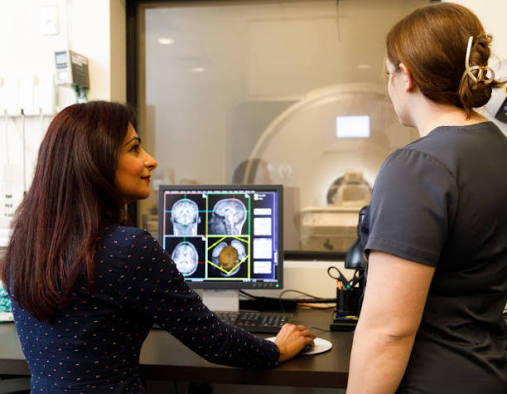
Functional MRI (fMRI)
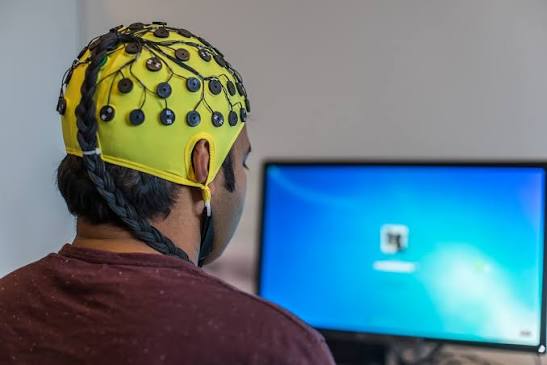
EEG
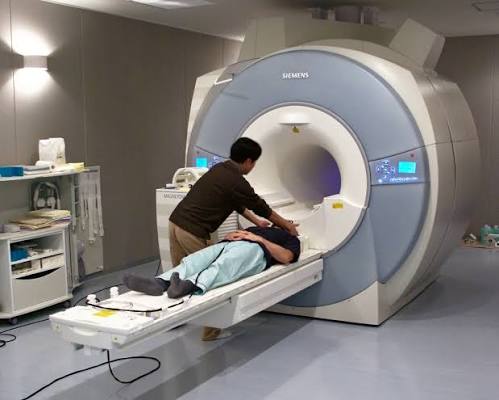
Simultaneous EEG-fMRI

Physiological and immune measures

Behavioral and self-report measures
Many of our studies pair these measures with interventions like mindfulness or exercise, allowing us to track changes in response to treatment. We design our studies with accessibility and sensory needs in mind, and we’re always working to make our protocols more comfortable and feasible for participants.
Funding & Support
Our research has been supported by the National Institutes of Health and the University of Houston Division of Research and Department of Psychology.
Representative Publications
- Cosgrove, K.T., Middleton, C., Thompson, T.G., Be, B., & DeVries, L. (2026) “It’s really complicated”: Engaging key stakeholders to inform a novel parent-led sexual health program for autistic youth. Journal of Autism and Developmental Disorders, 56, 1150-1162. https://doi.org/10.1007/s10803-024-06620-y
- Cosgrove, K.T., Rhudy, J.L., Morris, A.S., Thompson, W.K., Mosconi, M., Paulus, M.P., & Aupperle, R.L. (2026). Social connectedness and neurodevelopmental functioning in youth: Insights from the ABCD Study®. Advances in Neurodevelopmental Disorders, 10, 59-71. https://doi.org/10.1007/s41252-025-00448-y
- Reaven, J., Cosgrove, K.T., Losh, A., Nickles, S., Kerns, C.M., Pickard, K., Blakeley-Smith, A., Hayutin, L., Meyer, A.T., Middleton, C., Reyes, N.M., & Boles, R.E. (2025). Facing your fears in schools: Using the ADIS/ASA to characterize anxiety and intervention outcomes in students with autism or suspected autism. Frontiers in Psychiatry, 16, 1569435. https://doi.org/10.3389/fpsyt.2025.1569435
- Cosgrove, K.T., Tsuchiyagaito, A., Cohen, Z.P., Cochran, G., Yu, X., Misaki, M., Aupperle, R.L., Singh, M.K., Paulus, M.P., & Kirlic, N. (2024). Augmenting mindfulness training through neurofeedback: A pilot study of the pre-post changes on resting-state functional connectivity in typically developing adolescents. Frontiers in Neuroscience, 18:1397234. https://doi.org/10.3389/fnins.2024.1397234
- DeVries, L., Cosgrove, K.T., Hayutin, I., Dub, C., Postorino, V., & Middleton, C. (2024). The Birds and Bees: A pilot study of a parent-led sexual health education program for autistic youth. Sexuality and Disability, 42, 881-903. https://doi.org/10.1007/s11195-024-09869-4
- Cosgrove, K.T., McDermott, T.J., White, E.J., Mosconi, M.W., Thompson, W.K., Paulus, M.P., Cardenas-Iniguez, C., & Aupperle, R.L. (2022). Limits to the generalizability of resting-state functional magnetic resonance imaging studies of youth: An examination of ABCD Study® baseline data. Brain Imaging and Behavior, 16,1919–1925. https://doi.org/10.1007/s11682-022-00665-2
- Cosgrove, K.T., Kuplicki, R., Savitz, J., Burrows, K., Simmons, W.K., Khalsa, S.S., Teague, T.K., Aupperle, R.L., & Paulus, M.P. (2021). Impact of ibuprofen and peroxisome proliferator-activated receptor gamma on emotion-related neural activation: A randomized, placebo-controlled trial. Brain, Behavior, and Immunity, 96, 135-142. https://doi.org/10.1016/j.bbi.2021.05.023
- Cohen, Z.P., Cosgrove, K.T., Akeman, E., Coffey, S., Teague, K., Hays-Grudo, J., Paulus, M.P., Aupperle, R.L., & Kirlic, N. (2021). The effect of a mindfulness-based stress intervention on neurobiological and symptom measures in adolescents with early life stress: A randomized feasibility study. BMC Complementary Medicine and Therapies, 21(1), 1-14. https://doi.org/10.1186/s12906-021-03295-1
- Cosgrove, K.T., Kerr, K.L., Ratliff, E.L., Moore, A.J., Misaki, M., DeVille, D.C., Aupperle, R.L., Simmons, W.K., Bodurka, J., & Morris, A.S. (2020). Effects of parent emotion socialization on the neurobiology underlying adolescent emotion processing: A multimethod fMRI study. Research on Child and Adolescent Psychopathology, 50, 149-161. https://doi.org/10.1007/s10802-020-00736-2
- Kerr, K.L., Cosgrove, K.T., Ratliff, E.L., Burrows, K., Misaki, M., Moore, A.J., DeVille, D.C., Silk, J.S., Tapert, S.F., Bodurka, J., Simmons, W.K., & Morris, A.S. (2020). TEAMwork: Testing Emotional Attunement and Mutuality during concurrent parent-adolescent fMRI. Frontiers in Human Neuroscience, 14:24. https://doi.org/10.3389/fnhum.2020.00024
- Cosgrove, K.T., Burrows, K., Avery, J.A., Kerr, K.L., DeVille, D.C., Aupperle, R.L., Teague, T.K., Drevets, W.C., & Simmons, W.K. (2020). Appetite change profiles in depression exhibit differential relationships between systemic inflammation and activity in reward and interoceptive neurocircuitry. Brain, Behavior, and Immunity, 83, 163-171. https://doi.org/10.1016/j.bbi.2019.10.006
- Cosgrove, K.T., Kerr, K.L., Aupperle, R.L., Ratliff, E.L., DeVille, D.C., Silk, J. S., Burrows, K., Moore, A.J., Antonacci, C., Misaki, M., Tapert, S.F., Bodurka, J., Simmons, W.K., & Morris, A.S. (2019). Always on my mind: Cross-brain associations of mental health symptoms during simultaneous parent-child scanning. Developmental Cognitive Neuroscience, 40, 100729. https://doi.org/10.1016/j.dcn.2019.100729
A full list of Dr. Cosgrove’s publications is available at: https://www.ncbi.nlm.nih.gov/myncbi/1r79y0UsBpuMTf/bibliography/public/